Company Canteen vs. Office Lunch Delivery: What Works for Offices in Berlin, Munich & NRW?

Jatin Gagwani
Performance Marketer @Bella&Bona
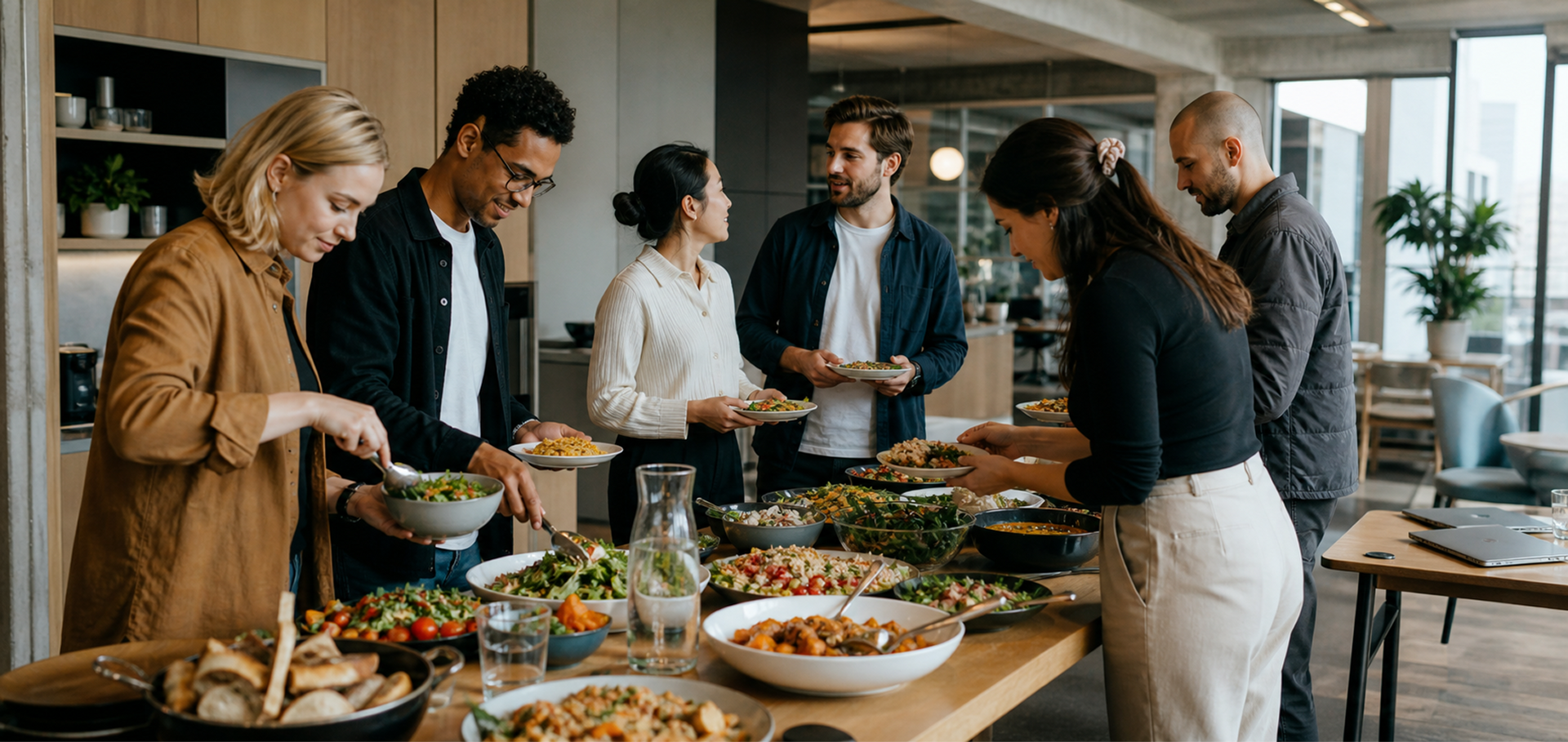
The lunch problem every growing German office faces
At some point, almost every company operating in Berlin, Munich, Cologne, Dortmund, or Essen reaches the same crossroads. The team has grown past the stage where people just figure out lunch individually. Productivity dips between noon and 2pm. Someone in leadership asks the question: should we invest in a canteen, or is there a smarter way to feed the team?
It sounds like a simple question. It isn't. The answer has real financial, operational, and cultural implications — and it depends heavily on where you are, how big your team is, and how fast you're growing.
This article compares both options honestly, city by city, based on what actually works for German business teams today.
What Is a Company Canteen?
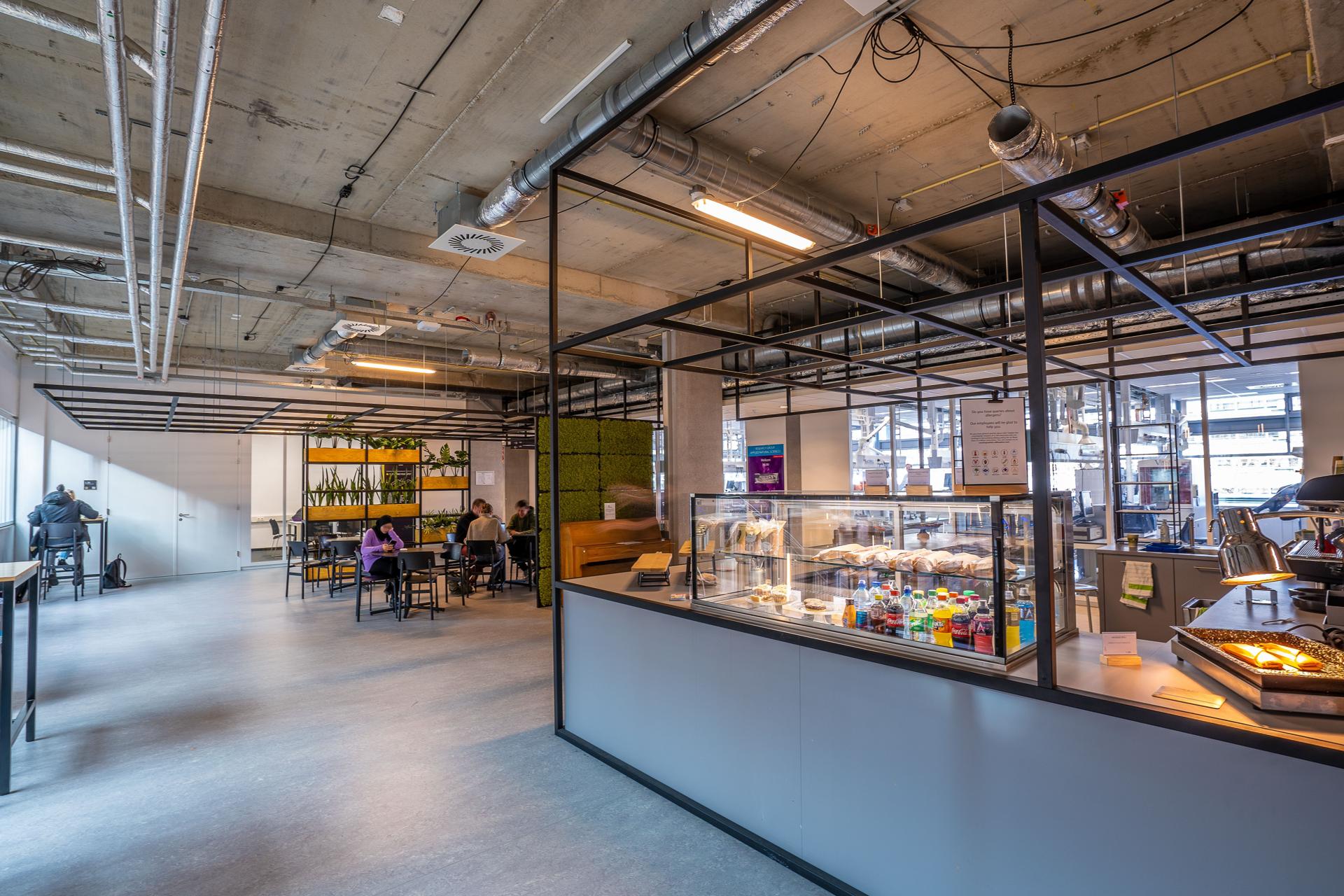
A company canteen (Betriebskantine) is an in-house food service operation — a dedicated kitchen and serving space within your office premises, staffed by a catering team, running daily meal service for employees.
In Germany, canteens are most common in large manufacturing companies, public institutions, and corporate headquarters with several hundred employees on site. They are often subsidised by the employer and fall under the Sachbezugswert benefit-in-kind rules — meaning employees pay tax only on the official fixed meal value (currently €4.57 per meal per day in 2026), not the full market price.
What Is Office Lunch Delivery?
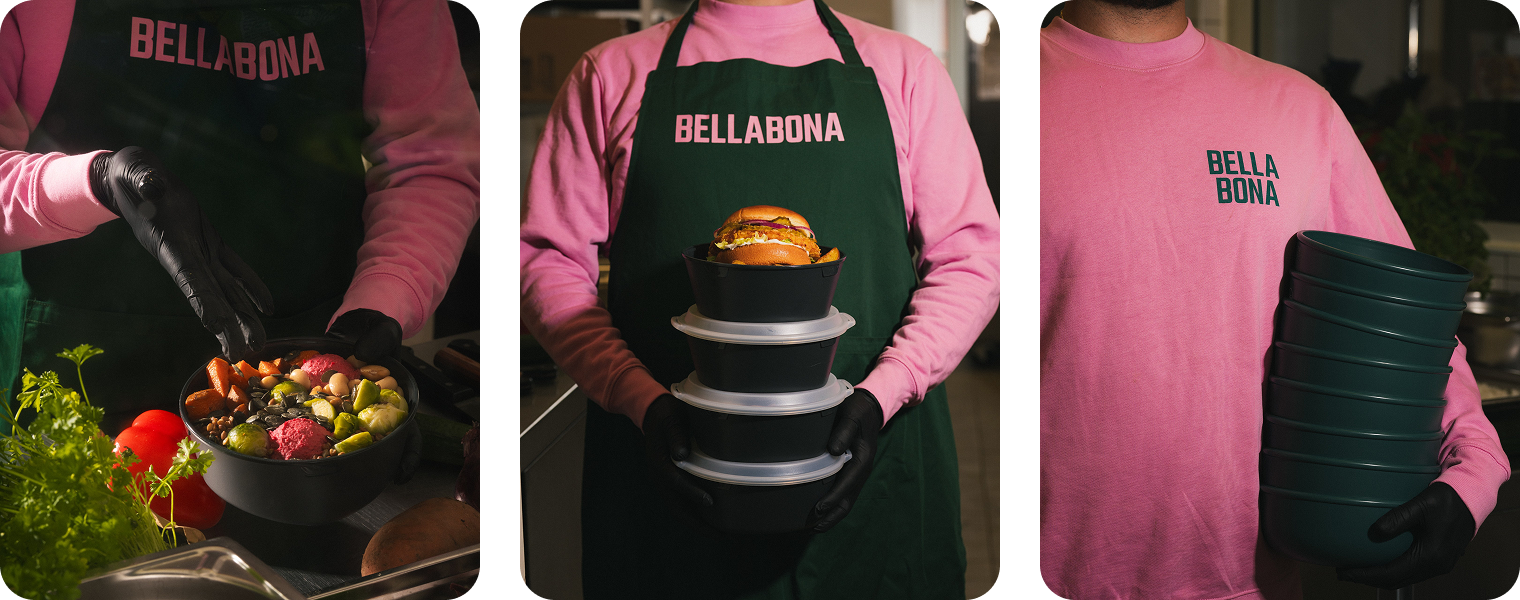
Office lunch delivery — provided by companies like Bella&Bona — means freshly prepared meals cooked in a dedicated kitchen and delivered to your office each working day. Employees order via an app, food arrives at the agreed time, and no kitchen infrastructure is required on your side.
This model has expanded significantly across Germany's major cities over the last several years, driven by the growth of tech companies, professional service firms, and international businesses that want the benefit of a proper team lunch without the overhead of running a kitchen.
The Comparison — Every Factor That Matters
Cost
Company canteen: Setting up a canteen involves capital expenditure on kitchen equipment, fit-out, ventilation, and food hygiene compliance. Ongoing costs include staff salaries, food procurement, equipment maintenance, and waste management. For a team of 100 people in a Berlin or Munich office, a full canteen operation typically runs at €15–25 per person per day when all costs are properly accounted for.
Office lunch delivery: A delivery service charges per meal, per person, per day — with no setup costs, no kitchen staff, and no infrastructure overhead. For teams of 30–200 people across Germany, this typically runs at €8–15 per person per day depending on menu format. There is no capital investment and costs scale directly with how many people are in the office.
Verdict: Office lunch delivery is almost always lower cost for teams under 300 people. The economics of a canteen only begin to work at significant scale — typically 400 or more employees eating on site every day.
Setup Time
Company canteen: Setting up a canteen in a German office typically takes 3–6 months minimum — planning approvals, kitchen fit-out, food safety certification (HACCP compliance), staffing, and supplier contracts all need to be in place before the first meal is served. In cities like Munich and Cologne where commercial fit-out costs are high, the upfront investment can reach six figures.
Office lunch delivery: A delivery service can typically be running within one to two weeks of first contact. The provider handles food preparation, logistics, and delivery. Your side involves agreeing terms, setting up employee accounts, and designating a delivery point in the office.
Verdict: Office lunch delivery wins on speed by a substantial margin. For companies opening new offices in Berlin, Munich, Dortmund, or Cologne, this is often the deciding factor.
Flexibility for Hybrid Teams
This factor has become significantly more important since hybrid working became standard across German offices.
Company canteen: A canteen is fixed infrastructure. If your team moves to three days in the office per week, your canteen costs remain largely the same — you still have the kitchen, the staff, and the procurement contracts. Scaling down is slow and expensive. Scaling up requires additional capital expenditure.
Office lunch delivery: Delivery services scale directly with actual headcount on any given day. If 60 people are in the office on Monday and 120 on Thursday, you adjust the order accordingly. There is no stranded cost, no minimum staff requirement, and no penalty for lower-demand days.
Verdict: For hybrid teams — which now describes most companies in Berlin, Munich, and NRW — office lunch delivery is structurally better suited to the reality of how offices actually work.
Menu Variety and Food Quality
Company canteen: A well-resourced canteen with a strong culinary team can offer genuine variety, live cooking stations, and high-quality ingredients. The reality for most German corporate canteens, however, is that cost pressures, procurement constraints, and staffing challenges push the menu toward a limited rotation of the same dishes. Employee satisfaction with canteen food typically peaks in the first few months and then steadily declines.
Office lunch delivery: A delivery service that operates its own kitchen — rather than reheating bought-in food — can offer weekly changing menus built around seasonal ingredients. The best providers in Berlin, Munich, and NRW source locally where possible and design menus with dietary variety as standard: vegan, vegetarian, halal, gluten-free, and high-protein options included in every delivery.
Verdict: A premium, well-funded canteen can match or exceed a delivery service. For the typical German office team of 50–200 people, a quality delivery service consistently outperforms the average canteen on both variety and freshness.
Administrative Overhead
Company canteen: Managing a canteen means managing a food service operation — supplier relationships, staffing, food safety compliance, menu planning, waste management, and equipment maintenance. In Germany, this also involves navigating the specific requirements of Betriebsverpflegung regulations. The administrative burden typically falls on a facilities or office management team and represents a meaningful ongoing time commitment.
Office lunch delivery: Once set up, a delivery service requires minimal day-to-day management. Your account team handles logistics, the ordering platform handles employee choices, and delivery happens on schedule. The main administrative task is updating headcount as the team changes.
Verdict: Office lunch delivery wins clearly on simplicity — particularly relevant for HR and office management teams in Berlin, Munich, and NRW who are already managing high operational complexity.
Employee Experience
Company canteen: A canteen creates a dedicated physical space for the team to eat together — which has genuine value for company culture. A well-designed, well-run canteen with good food can be a real workplace benefit. The risk is that a poorly run canteen becomes a daily source of frustration and actively damages morale rather than building it.
Office lunch delivery: A delivery service brings food to wherever your team eats — whether that is a kitchen area, meeting rooms, or a shared breakout space. The social benefit is present as long as people eat together, but the dedicated physical canteen space does not exist. For offices without a dedicated dining area, this is not a disadvantage.
Verdict: Both can deliver a strong employee experience. The canteen has a structural advantage if the physical space and food quality are both excellent. Office lunch delivery wins on reliability and consistency — you know exactly what is arriving, when.
How This Plays Out City by City
Berlin
Berlin has Germany's largest concentration of tech companies, startups, and scale-ups, which now account for roughly 94,000 local jobs, according to the Berlin Startup Ecosystem Report 2025, most of which operate in flexible office environments and hire internationally. The workforce is diverse, dietary requirements are varied, and headcount can change significantly over a 12-month period. Office lunch delivery is the dominant model for this environment. The economics of a canteen simply do not work for the typical Berlin tech company of 50–200 people, and the operational flexibility of delivery fits Berlin's working culture significantly better.
Munich
Munich has a more established corporate base — financial institutions, engineering firms, media companies, and professional services. Some Munich offices do operate canteens, particularly within larger buildings or campuses. For teams under 300 people, however, the cost and complexity comparison still favours delivery. The high cost of commercial space in Munich also makes dedicating a large area to a kitchen a more expensive proposition than in other German cities.
NRW — Cologne, Dortmund, Essen and Beyond
The NRW region is Germany's most densely populated business area, with a diverse mix of established industrial companies, logistics firms, media groups in Cologne, and a growing professional services sector. The office lunch delivery market here is significantly less developed than in Berlin or Munich — which means less competition and, for companies that move early, a real opportunity to establish a team benefit that most NRW companies are not yet offering. For offices in Cologne, Dortmund, Essen, Düsseldorf, and surrounding areas, delivery is almost always the right choice simply because the canteen infrastructure does not exist in most commercial office buildings, and building it from scratch is rarely justified.
Which Option Is Right for Your Team?
| Factor | Company Canteen | Office Lunch Delivery |
|---|---|---|
| Best team size | 400+ on-site daily | 30–300 people |
| Setup time | 3–6 months | 1–2 weeks |
| Cost per person | €15–25/day all-in | €8–15/day |
| Hybrid work flexibility | Low — fixed overhead | High — scales daily |
| Admin overhead | High | Low |
| Menu variety | High if well-resourced | High with right provider |
| NRW / new city expansion | Not practical | Immediate |
| Capital investment needed | Significant | None |
The Honest Summary
For the vast majority of German offices — companies between 30 and 300 people, operating in Berlin, Munich, or NRW — office lunch delivery is the better choice. It costs less per head, starts faster, scales with your team, and removes an entire category of operational complexity.
A canteen makes financial sense when you have a very large, stable, predominantly on-site workforce, an existing kitchen facility, and the management resource to run it properly. That describes a relatively small number of German companies.
For everyone else — particularly the international companies, tech businesses, and growing firms in Berlin, Munich, Cologne, Dortmund, and Essen — office lunch delivery delivers the same core benefit with a fraction of the overhead.
Mini-FAQ
Is a company canteen tax-deductible in Germany?
Yes. Both canteen meals and employer-subsidised office lunch delivery fall under Germany's Sachbezugswert rules. The meal subsidy is tax-optimised at the official benefit-in-kind rate — currently €4.57 per meal per day in 2026 — and the employer cost is deductible as a business expense regardless of whether food comes from a canteen or a delivery service. You can calculate your tax savings here.
At what team size does a canteen make financial sense in Germany?
The economics typically work from around 400 employees eating on-site daily. Below that threshold, the fixed costs of kitchen infrastructure, staffing, and compliance almost always exceed the per-meal cost of a quality office lunch delivery service.
Does office lunch delivery work for hybrid teams in Germany?
Yes — and it is often better suited to hybrid schedules than a canteen. You order for the people actually in the office on any given day, and costs adjust accordingly. A canteen has the same fixed overhead regardless of attendance.
Which German cities does Bella&Bona serve?
Bella&Bona delivers office lunch in Berlin, Munich, and across NRW — including Cologne, Düsseldorf, Dortmund, and Essen. For enquiries in other cities, contact us directly.
Can a delivery service completely replace a company canteen?
For most German offices between 30 and 300 people, yes. A daily delivery service provides the same core benefit — fresh, employer-subsidised lunch for the team — without the infrastructure, staffing, and overhead a canteen requires. The one thing delivery cannot replicate is a large dedicated dining space, which matters more for some companies than others.
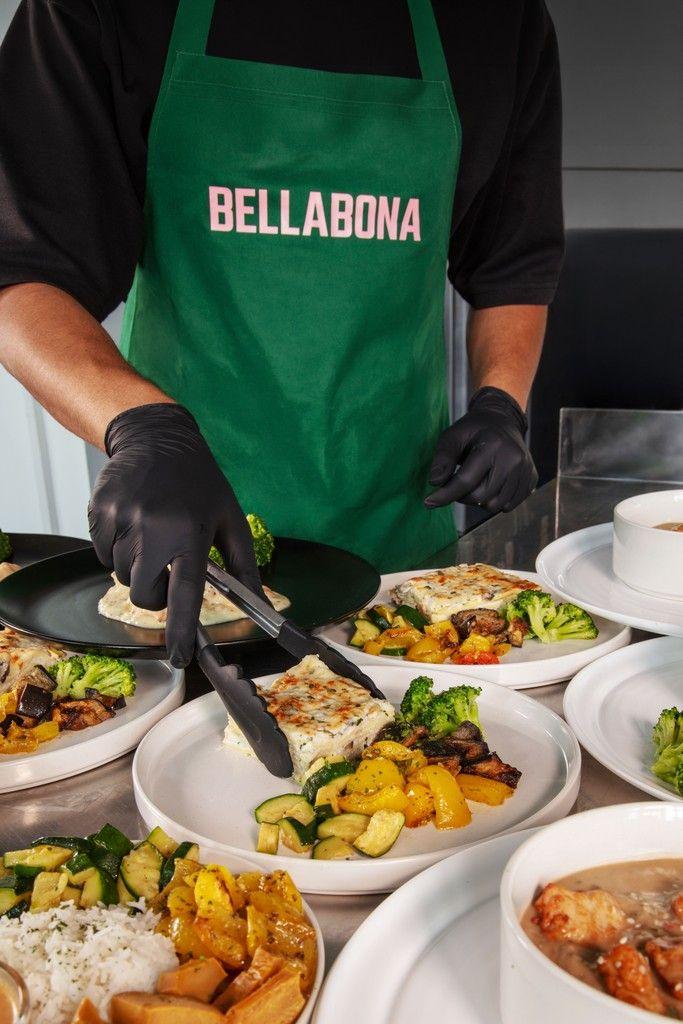
Berlin, Munich & NRW
Considering office lunch delivery?
From 30 people upwards. No kitchen required, no long-term lock-in.