Employee Retention Strategies: Why Shared Meals Beat Bonuses

Jatin Gagwani
Performance Marketer @Bella&Bona

Free snacks won't fix a hungry team.
There's a difference between a snack and a meal, and it's the difference most employee retention strategies miss. A fruit bowl in the kitchen is a perk, but nobody's career choice hinges on it. A shared lunch, however, is the kind of ritualised habit that shapes how employees feel every day of the week.
Here's what the data says about that, and what to do with it.
Why Employees Leave
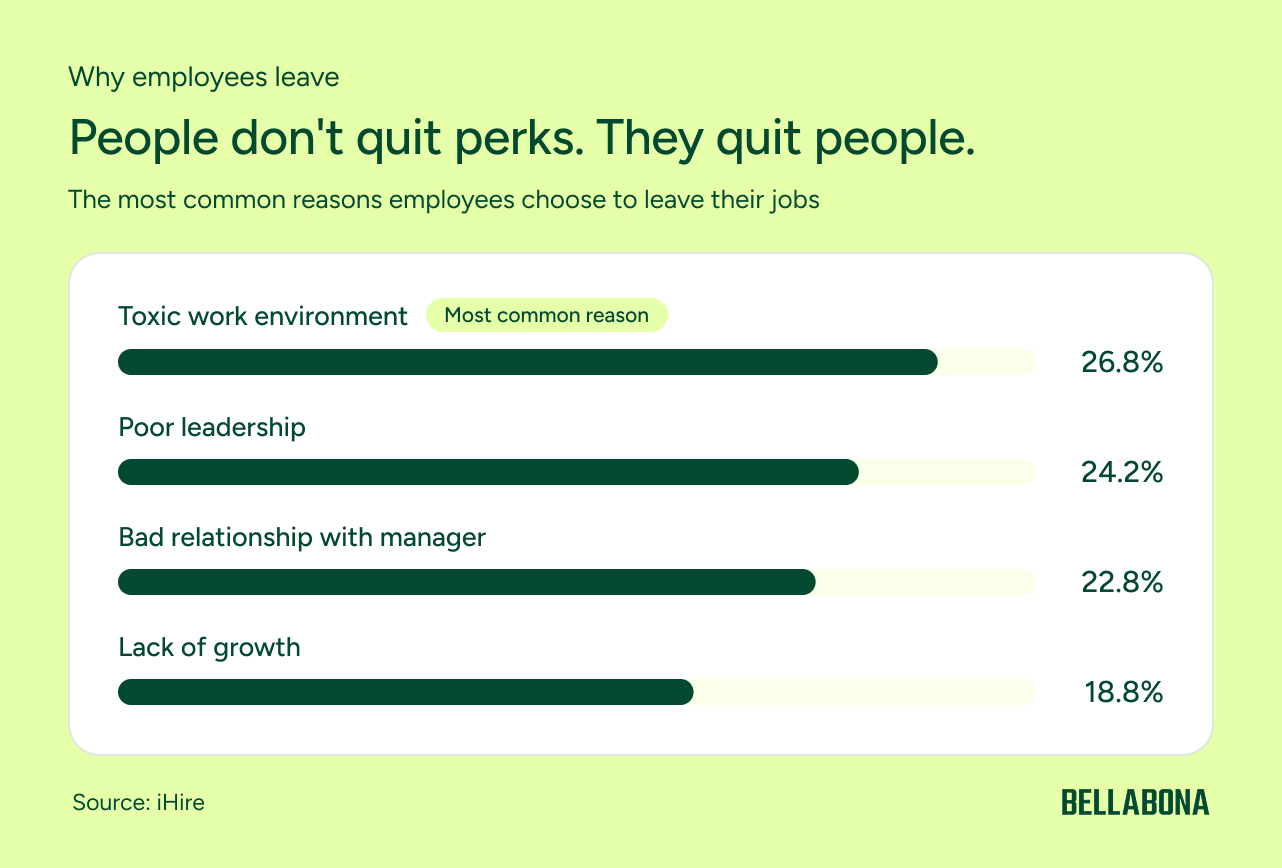
According to iHire's 2025 Talent Retention Report, the top reasons why employees leave their jobs are a toxic work environment (26.8%), poor leadership (24.2%), and a bad relationship with their direct manager (22.8%), with lack of growth opportunities close behind (18.8%). Pay, burnout, and work-life balance all ranked lower than they did in 2024. (Source: iHire 2025 Talent Retention Report)
Germany makes the point more bluntly. Only 11% of German employees are engaged at work according to Gallup's Engagement Index, with 74% "not engaged" and 15% actively checked out. And the problem starts at the top: just 27% of German managers feel supported in their own role. (Source: Gallup Engagement Index Deutschland)
Read those two lists together and a pattern shows up. People don't leave over a missing perk. They leave over the texture of the ordinary working week, who they sit with, who manages them, whether anything is moving.
The Bonus Trap
The instinct when someone resigns is to reach for money. It works, but less often than most employers assume: companies that tried compensation increases as a retention strategy succeeded 34.3% of the time. While useful, they are not decisive, and don't win against an absent manager.
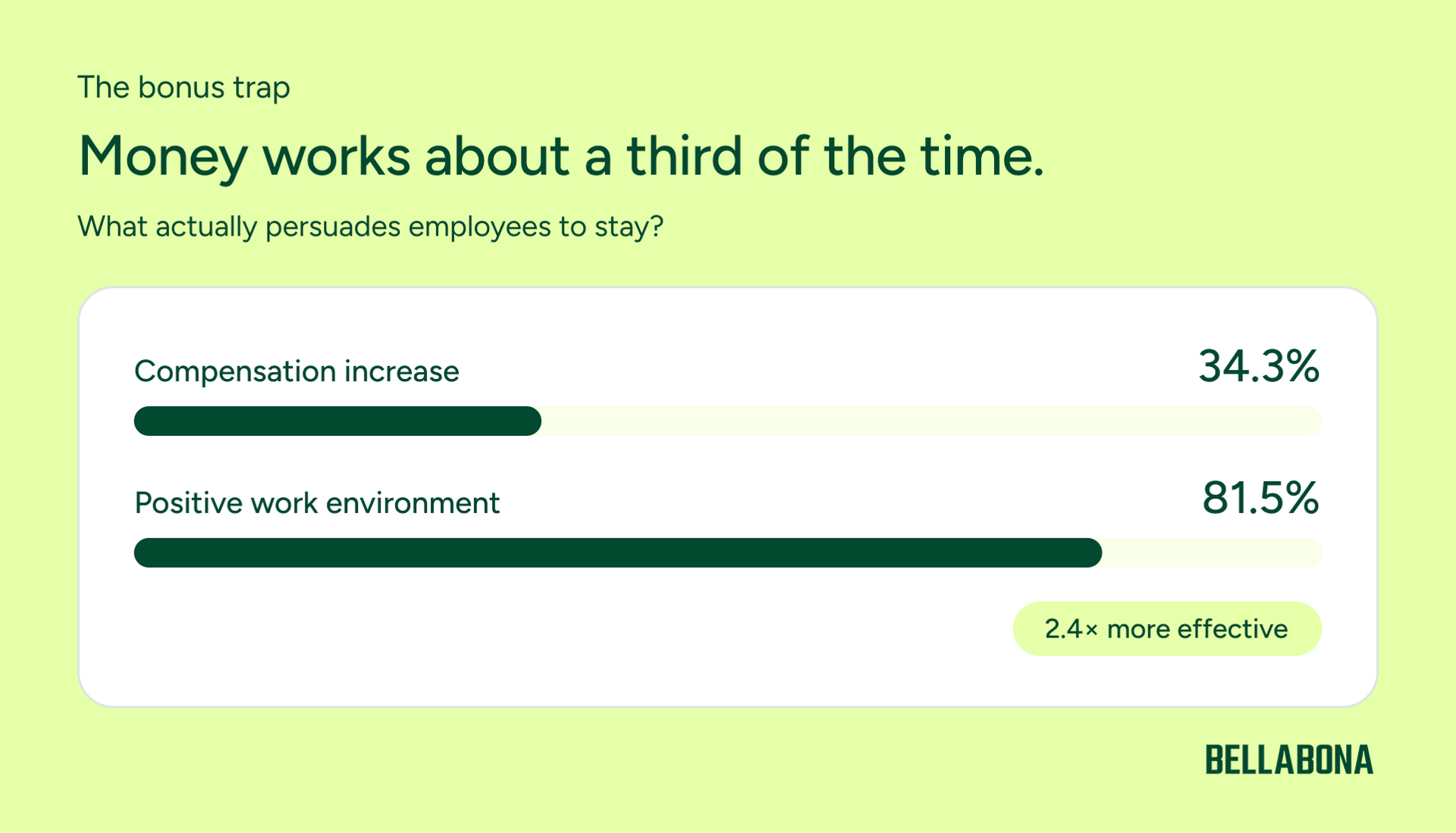
What actually correlates with people staying, per the same report:
- A positive work environment — 81.5% effective
- Solid health coverage — 68.4%
- Real work-life balance support — 63.9%
- Retirement benefits — 59.4%
- Genuine professional development — 57.4%
(Work-life balance appearing here and low on the exit list isn't a contradiction: one measures why people walk out, the other measures what keeps them in the building.)
Notice what every item on that list has in common. None of them is an event. They're all ongoing conditions that an employee experiences every single week. And that's the whole idea behind improving employee retention and reducing employee turnover: stop buying moments, start building routines.
Food as a Retention Habit
Which brings us back to lunch, and to why food is a stronger retention lever than a bonus of the same value.
A bonus is a transaction. A shared meal is a recurring reason for people who'd otherwise never speak to end up at the same table, which is precisely the mechanism that fixes the top three reasons people quit. Manager relationships get repaired over human conversations and toxic environments are diluted by people actually knowing each other.
The food ideas that hold up as retention habits rather than gestures:
- A weekly team lunch, same day, every week. Not catered "when budget allows", but a fixed slot on the calendar that survives a busy quarter.
- A lunch on day one for every new hire, before the laptop setup and the HR forms. It's the cheapest onboarding signal you will ever send.
- A monthly team-picked catering day, where the team chooses what's on the table. The choice matters as much as the eating.
This is the same principle we've written about across the series: structure beats symbolism. We've covered how to approach a return-to-office policy and 15 return-to-office incentives that actually work, and food comes out at the top of the list in both, for the same reason it does here: it's recurring.
Habits Beyond the Table
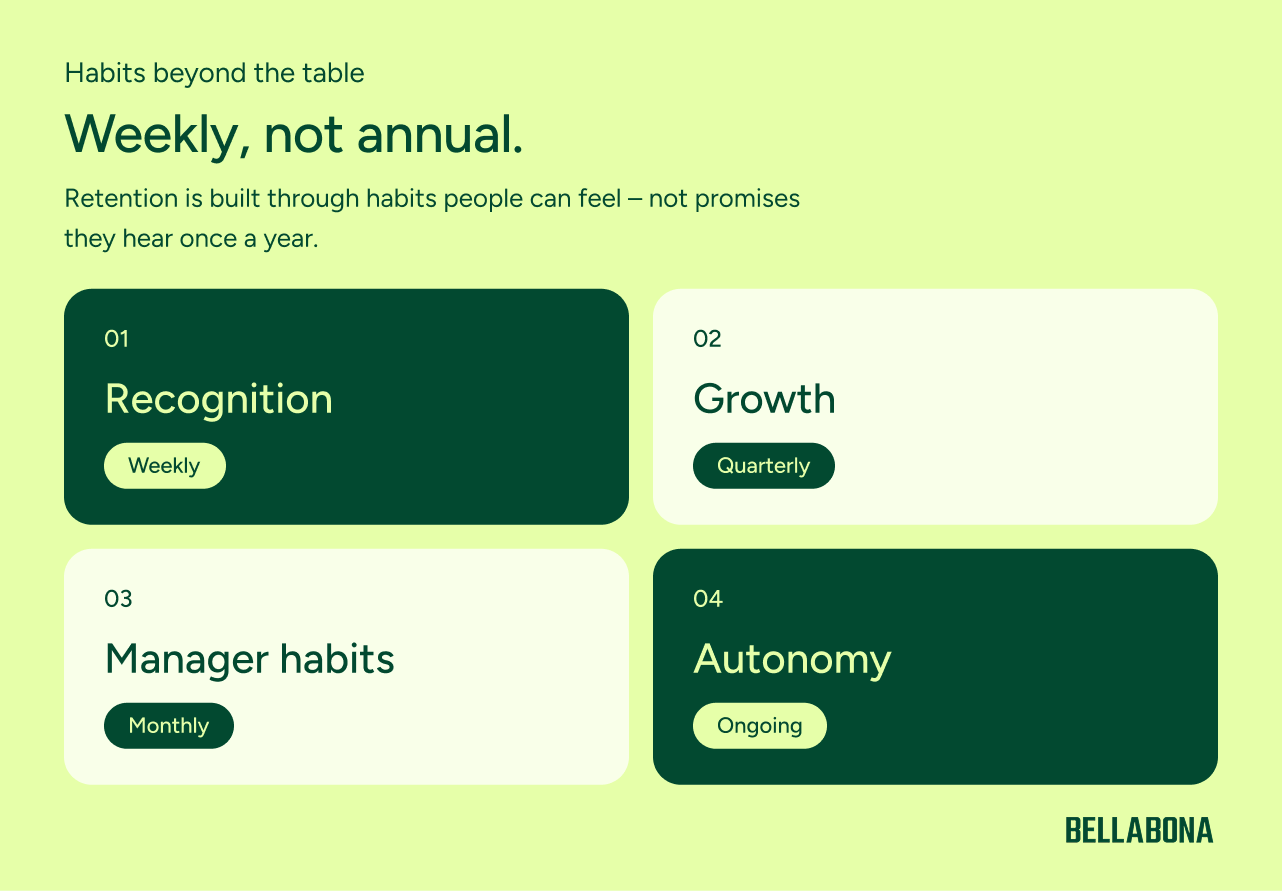
Lunch isn't the only lever, and food alone won't rescue a badly managed team. The rest of the employee retention ideas worth your budget follow the same rule: weekly, not annual. If you're looking for employee engagement ideas for the office that survive contact with a busy quarter, start here.
Recognition
- A specific shoutout at the start of every team meeting: real examples rather than "great job everyone."
- A peer-nominated "assist of the week," voted on by colleagues rather than managers.
- Milestones: work anniversaries, first shipped project, a promotion, announced personally by name
Growth
- A quarterly "stay conversation": literally ask what would make you consider leaving, before they already are.
- A mentor or buddy for the first 90 days, with real check-ins at day 30, 60, and 90.
- One day a quarter to shadow a different team, for anyone curious about a different path.
- A published pay and promotion ladder every employee can actually see.
Manager habits
- A skip-level coffee once a quarter: 20 minutes, no agenda, with the manager's manager.
- A monthly 1:1 that's explicitly about the person, not a status update on their tickets.
Autonomy
- Letting people choose which project they lead next, instead of everything arriving top-down.
- A recurring team vote on the things that shape the day-to-day: meeting cadence, tools, sprint structure.
None of these show up on a benefits brochure. All of them show up in retention numbers.
Loyalty Is Built Weekly
Employee loyalty in the workplace isn't won with a single engagement survey or a once-a-year town hall. Employee satisfaction at work is built in small, repeated moments that tell people they're seen, growing, and not just filling a seat. The organisations bucking Germany's engagement numbers aren't the ones spending more, they're the ones treating management quality and daily culture as seriously as the org chart.
So if you're building your next round of employee retention strategies, skip the grand gesture. Fix the manager relationship, book the weekly lunch, and let the fruit bowl just be a fruit bowl.
Berlin & Munich
Give people a reason to come in
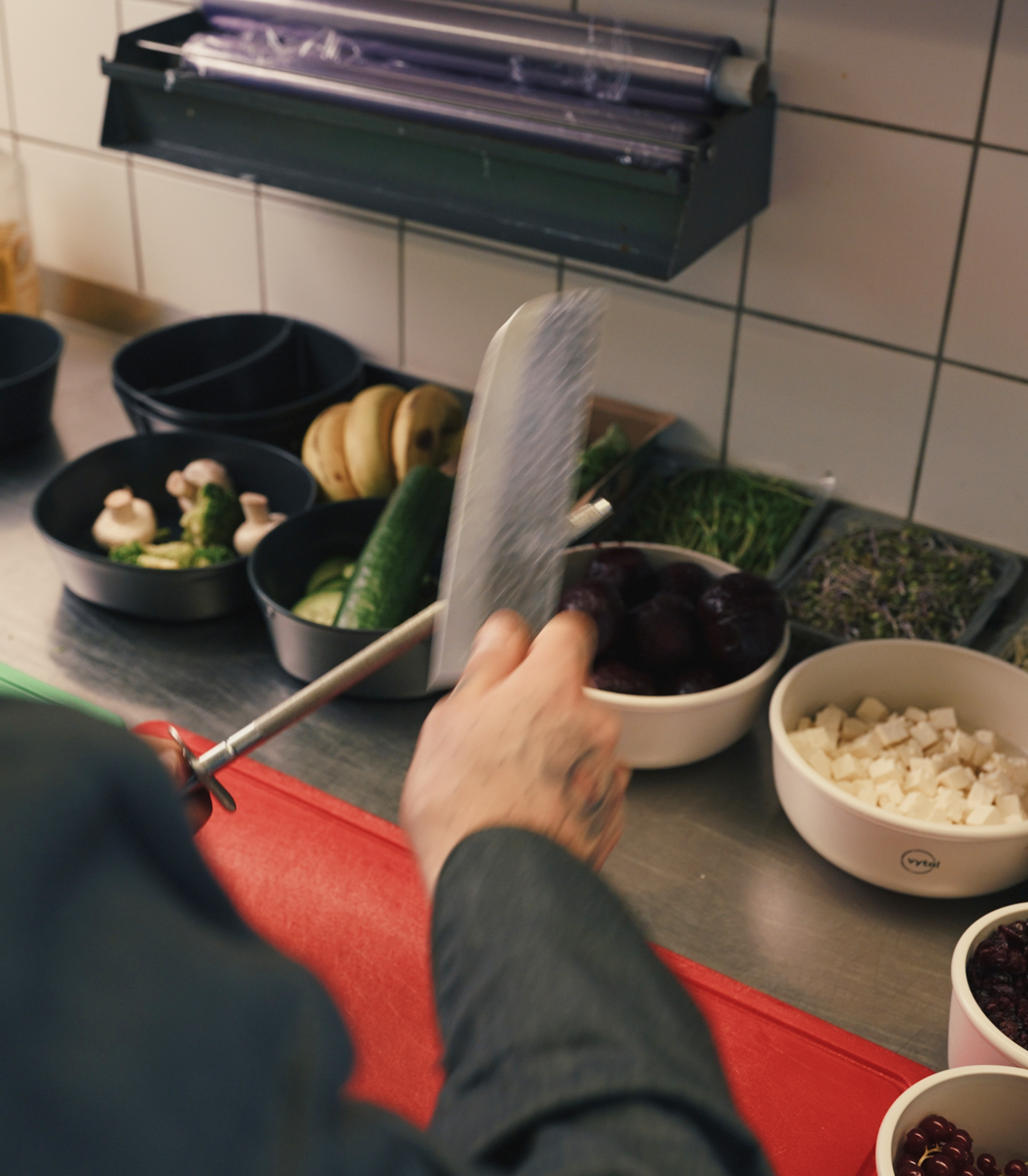
Fresh, rotating team lunches on a fixed day, with the team choosing what's on the table.